After the death of her husband from a high voltage shock while attempting to repair the home refrigerator, 24-year-old Sa’adia suddenly found herself widowed with five children, the youngest 3 months old. Before her husband passed away, he struggled to bring home income working in the agriculture fields until that ended along with most jobs…
Like many families in the Gaza Strip, Ana’am was greatly impacted by the COVID-19 lockdown. Losing both her job and home, Ana’am struggles to provide food and basic necessities for her 5 children. Rather than living on the street, space was found for her and her children in an abandoned store front, though it does…
The situation in the Gaza Strip has never been worse than it is nowadays. The global COVID-19 pandemic has only highlighted the already terrible conditions the Strip was going through. People in Gaza are currently living in a double quarantine. The first quarantine is due to the COVID-19 pandemic and the other one is due…
“I have many illnesses, but my main source of pain is not being able to feed my children.” said Sabra, who must feed and shelter 11 family members. The Guardian recently reported that in Gaza families search through rubbish to find food to feed their families. During this unparalleled period, the ripple effects from COVID19…
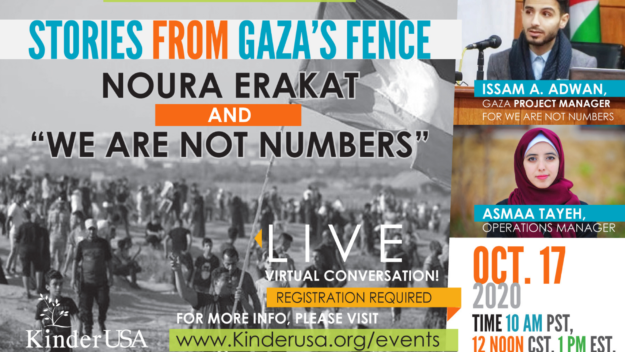
The next installment of our live conversation series, Talks on Palestine, is Saturday, October 17th at 10 AM PST/ 12 PM CST/ 1 PM EST featuring Noura Erakat and We Are Not Numbers! Join us as we hear stories directly from Gaza’s fence. Stream LIVE on our Facebook page or YouTube channel. The video will…
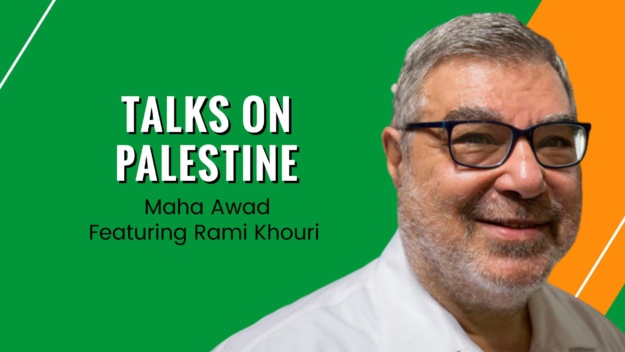
In case you missed our discussion with Rami Khouri, you can watch it on our YouTube channel. We talked about the past, present and future of Lebanon, and how to move forward after the explosion in Beirut. The goal of this installment of Talks on Palestine is to raise funds for our Mobile Library, which…
KinderUSA, with our local partner on the ground, is implementing emergency food assistance in response to the severe socio-economic impacts of the COVID-19 pandemic in the country. In addition to the blockade of land, sea, and air, now in its 13th year, Gaza’s population is suffering mercilessly. The gravity of the pandemic cannot be underestimated…
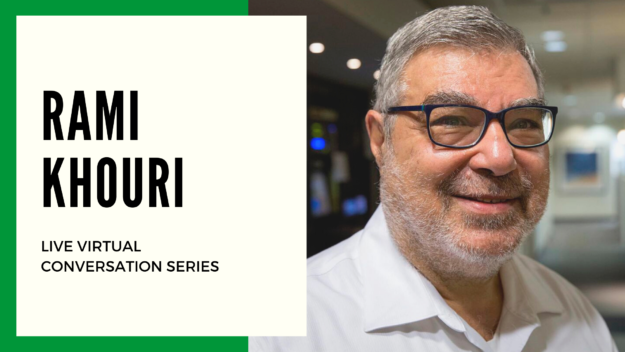
Lebanon: From the Ashes About this Event Rami Khouri is an internationally-syndicated columnist, Senior Fellow at Harvard Kennedy School Belfer Center, and Director of Global Engagement at AUB.
The blast that decimated large swaths of Beirut left hundreds of thousands homeless, and over 200 dead with thousands more witnessing their livelihoods in ruins. The explosion exacerbated already ravaging economic conditions for a population struggling to put food on the table. The Beirut port explosion has created a major food security emergency in Lebanon…
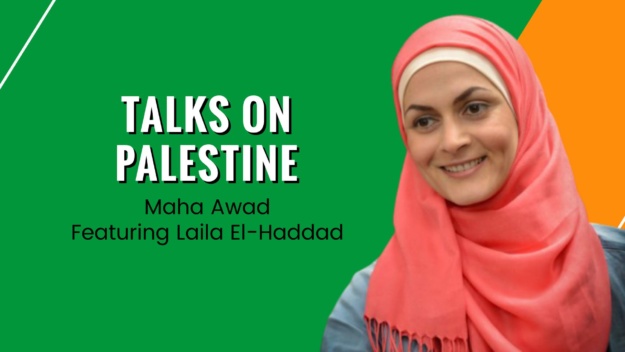
In case you missed our cooking demonstration with Laila El-Haddad, you can watch it on our YouTube channel. Laila cooked Okra and Lentils while discussing the intersection of food and politics in Gaza. The goal of this installment of Talks on Palestine is to raise funds for our Women Empowerment Chicken Farming program which continues to…
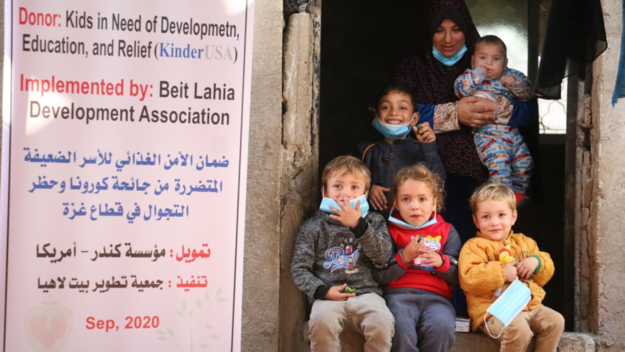
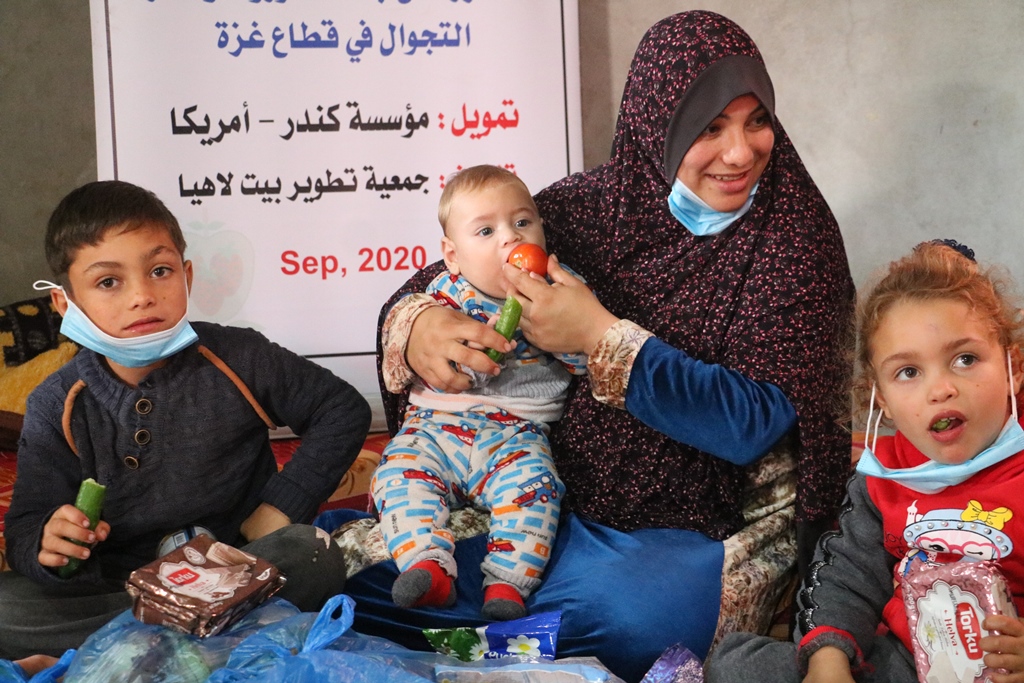
After the death of her husband from a high voltage shock while attempting to repair the home refrigerator, 24-year-old Sa’adia suddenly found herself widowed with five children, the youngest 3 months old. Before her husband passed away, he struggled to bring home income working in the agriculture fields until that ended along with most jobs in Gaza due to the pandemic.
Sa’adia now relies on charity, the goodwill of neighbors, family when they can, and organizations like KinderUSA just to feed her children. Living alone with her five children in a house that lacks the most basic needs has been a challenge and a blessing; they do have shelter unlike many female-headed households in Gaza.
“I am unable to feed my children and I wait for my relatives or my brother who has a big family to help me with the least they can, I do not know what to do to provide my children with their needs.” Said Sa’adia.
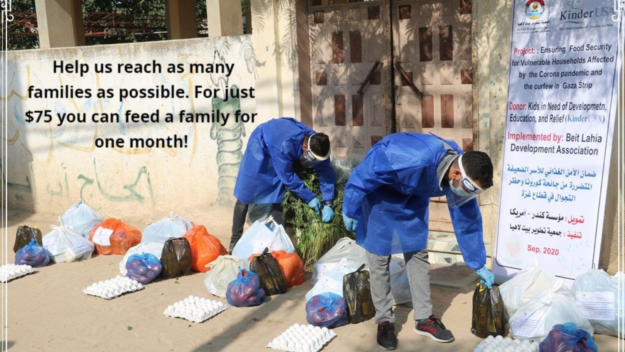
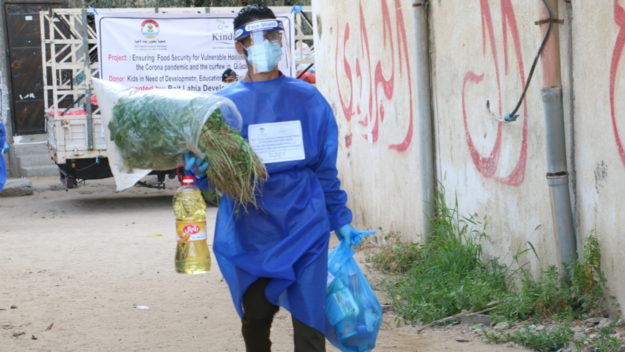
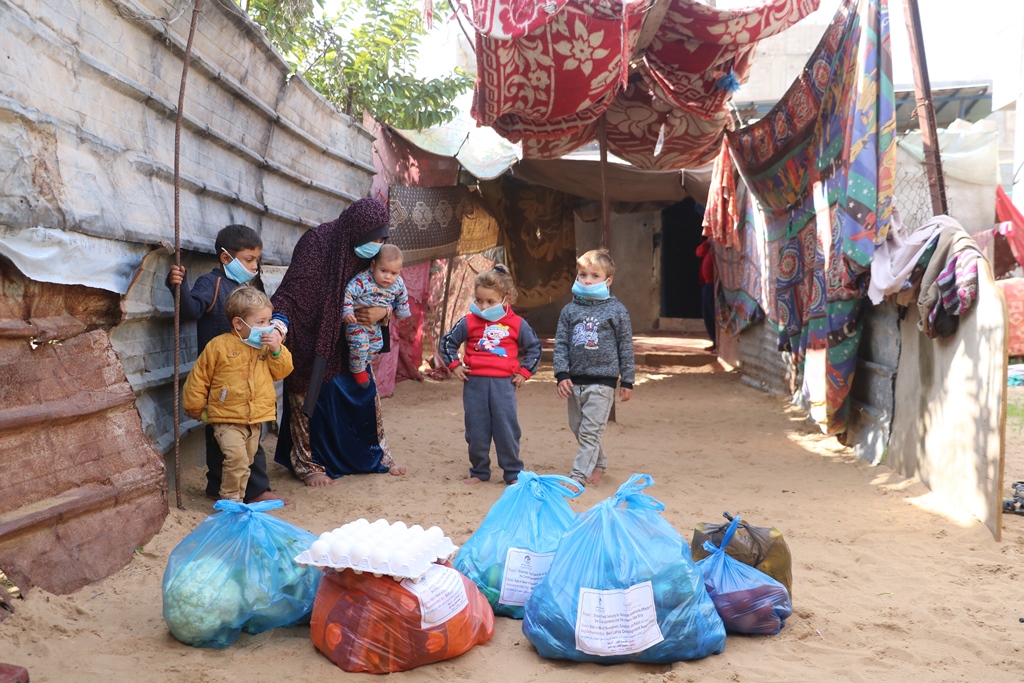
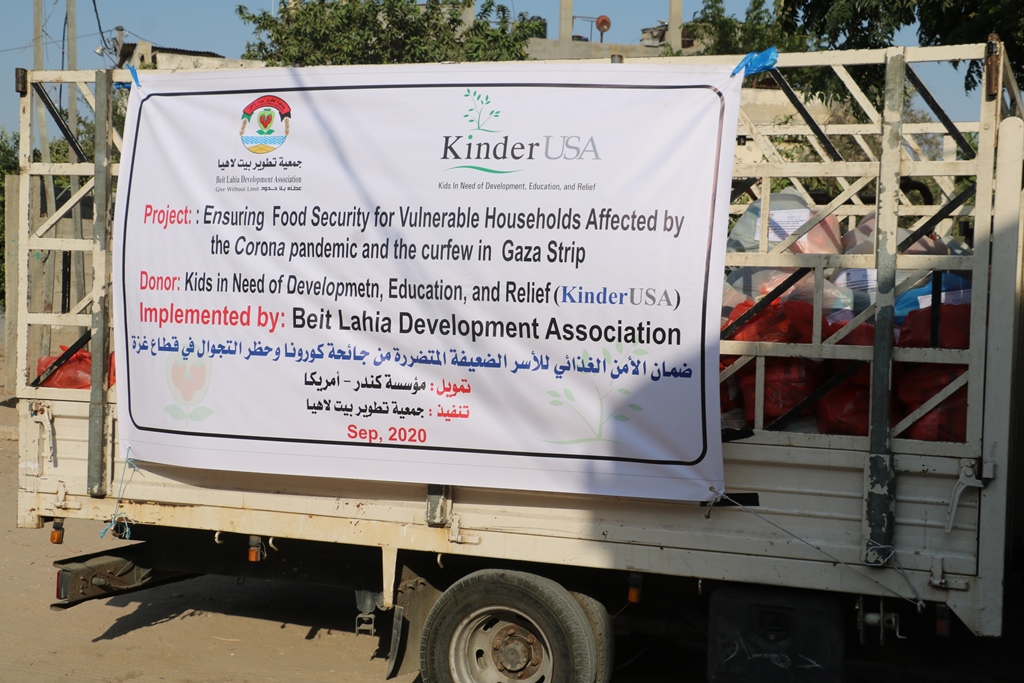
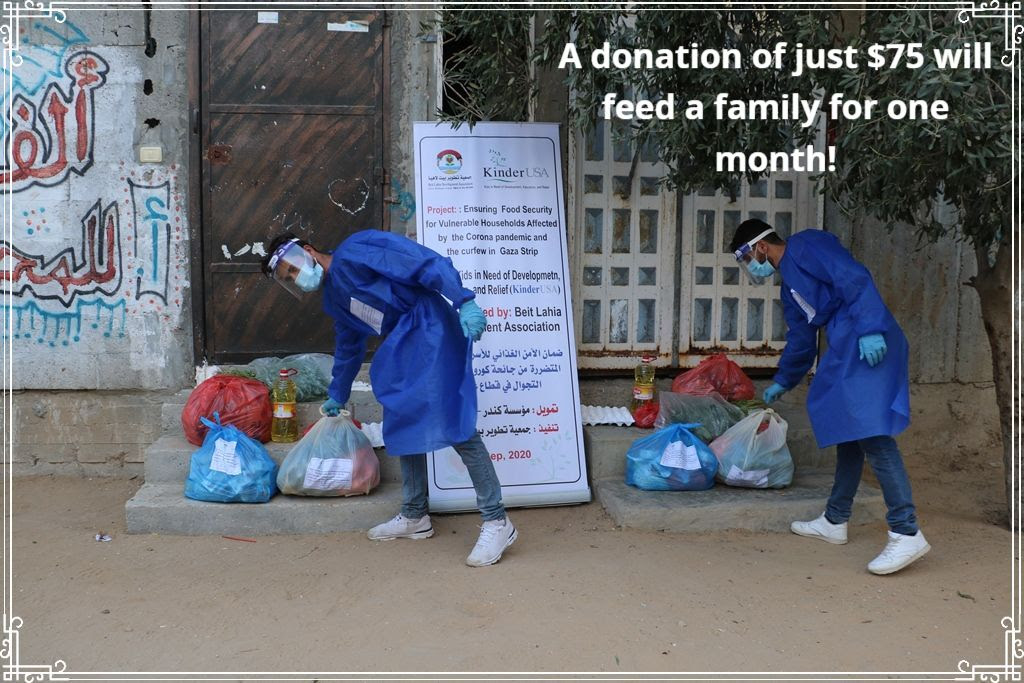
Along with 880 other families in desperate need, our partners on the ground in Gaza provided Sa’adia with enough food for a month as part of the KinderUSA Emergency Food Distribution. Each family received enough food to get them through a month which includes dried legumes, canned meats, eggs, milk, and PPE.
The parents of thousands of vulnerable children in Gaza do not know where their next meal will come from. This, at the same time COVID-19 is ravaging the country contributing to rising levels of hunger and poverty. Moving into the New Year, Gazan’s will face even more hardships as families move in a downward spiral of uncertainty.
For $75 you can feed a family such as Sa’ada’s for one month. That’s just $2.50 a day for 6 family members. Whatever amount is meaningful to you, please consider making a donation today. Thank you for your humanity and please, be safe.
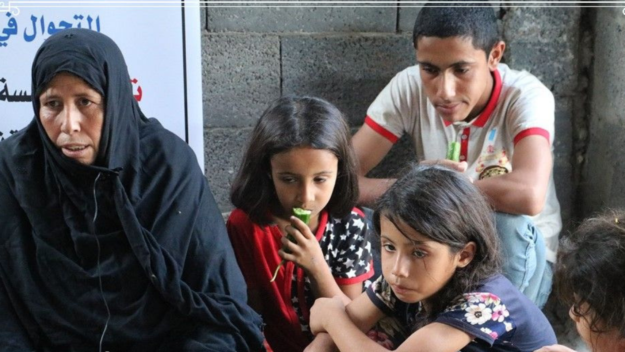
Like many families in the Gaza Strip, Ana’am was greatly impacted by the COVID-19 lockdown. Losing both her job and home, Ana’am struggles to provide food and basic necessities for her 5 children. Rather than living on the street, space was found for her and her children in an abandoned store front, though it does not have proper kitchen or bathroom facilities. These unhealthy and unsafe conditions exacerbate the situation for two of her children who suffer from various health concerns.
During these difficult times, Ana’am’s family relies on food assistance from the UN and relatives, but it is still not enough to cover their basic needs. Today, many families like Ana’am are struggling to put food on their tables, experiencing the most extreme conditions due to COVID related economic closures and lock downs.
Our partners in Gaza were directed to Ana’am as a family in desperate need and were provided with enough food for a month, along with 650 families who are beneficiaries of the ongoing KinderUSA Emergency Food Distribution. Each family receives enough food to get them through a month which includes dried legumes, canned meats, eggs, milk, and PPE.
Thank you to all of those who continue to support our efforts during this critical time in all of our lives, but particularly the lives of Palestinians living in Gaza. This virus knows no borders and now, Gaza is experiencing a 30% infection rate and facing another countrywide lockdown. We are appealing to all our donors to continue to support this project so we can reach more families. For $75 you can feed a family for one month. That is just $2.50 a day.Please make a donation today to help us expand our reach. Thank you.
The situation in the Gaza Strip has never been worse than it is nowadays. The global COVID-19 pandemic has only highlighted the already terrible conditions the Strip was going through. People in Gaza are currently living in a double quarantine. The first quarantine is due to the COVID-19 pandemic and the other one is due to the blockade which has been the Strip’s harsh reality for the past 14 years.
Gazans find themselves trapped in increasingly unlivable conditions. This quarantine has led to more food insecurity, unemployment, and poverty rates. There are more than 1800 families, which is increasing daily, that are quarantined with no access to basic needs such as food and medications. These families consist of children, people with disabilities, and elders. The government is not able to supply these families with their daily needs. KinderUSA has been working on supporting more than 600 of these families over the last few months but it is still just a drop in the bucket of need.
The situation did not only worsen economically but also psychologically, especially for children. For the many children living in camps, school is considered an outlet for their energy and is also a release from the pressure they feel due to the blockade and ongoing conflict. Schools are now closed as a preventative measure to avoid spreading the virus. This closure has resulted in a great number of children receiving no education for the past months. Home learning systems are not an option because of the lack of proper internet and electricity. It is expected that children will be in need of more psychological support after the pandemic since they are not communicating with their peers and locked in their houses.
Today we have 30 neighborhoods out of 90 in the Gaza Strip, considered as red zone areas where movement is restricted due to the spread of the virus there. These 30 areas are known to have at least half of the population in the Gaza Strip. The closure of these areas forced many people out of their jobs, leaving them unable to afford their basic needs and scrambling just to feed their families. People in Gaza have reported that they would prefer to die due to COVID-19 instead of hunger. After allowing companies, high schools, and markets outside of the red zones to reopen for only 11 hours within the past month, all premises are expected to close fully again due to the increasing number of COVID-19 cases and deaths.
The increasing number of COVID-19 cases is also overwhelming hospitals as they are unable to provide medical assistance to such huge numbers of people. Today, more than 20% of the daily tests are positive, which means that the number of cases is increasing rapidly. Yet, hospitals lack testing kits meaning people are not able to get tested, further increasing the danger of spreading the virus. Hospitals also have a shortage of almost 47% of medications to assist COVID-19 patients. The people needing intensive care include the young, elderly, and those with chronic diseases. A huge problem is there are only two hospitals dealing with COVID-19 cases with a total of 50 beds in the intensive care unit.
The Gaza Strip has been never in so much need of humanitarian aid and your help. The levels of poverty, food insecurity, psychological problems, unemployment, and more are becoming the Strip’s reality. We want to thank our on-the-ground coordinator, Hana, for her tireless work in getting important resources and hope to our people. We appreciate you.
KinderUSA continues to provide emergency food relief baskets to families that include dried legumes, canned meats, eggs, and milk. This virus knows no borders and is leaving a devastating cost most particularly on human life and the lives of our children. It is our shared responsibility and now more than ever, we need to support each other. We are appealing to all our donors to please contribute so we can reach more families. For $75 you can feed a family for one month. That is just $2.50 a day. Please make a donation today to help us expand our reach. Thank you.
“I have many illnesses, but my main source of pain is not being able to feed my children.” said Sabra, who must feed and shelter 11 family members.
The Guardian recently reported that in Gaza families search through rubbish to find food to feed their families. During this unparalleled period, the ripple effects from COVID19 has witnessed mass unemployment, poverty, and hunger.
Sabra and her children live in harsh conditions in north Gaza in a structure, lacking electricity, and with water not properly connected leaving all vulnerable for numerous waterborne diseases.
“I cannot do it all. Food is first, to feed my children,” said Sabra.
“My disease is not my suffering. Its watching my children go without. We have no source of income except for charity given every three months, which is not enough for us to eat. After the pandemic and closure, most of the time we do not find anything to eat. When I do find food, I use fire to cook our food from wood and scrap on the street. Even that is becoming scarce.”
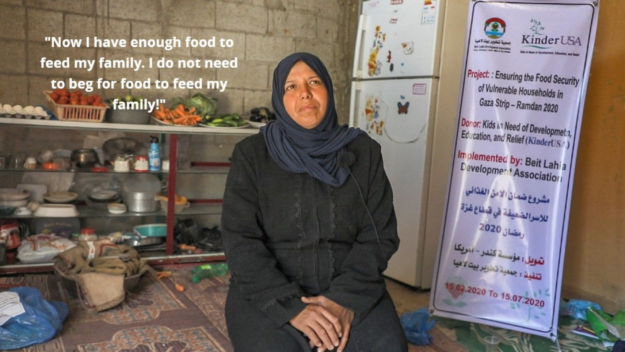
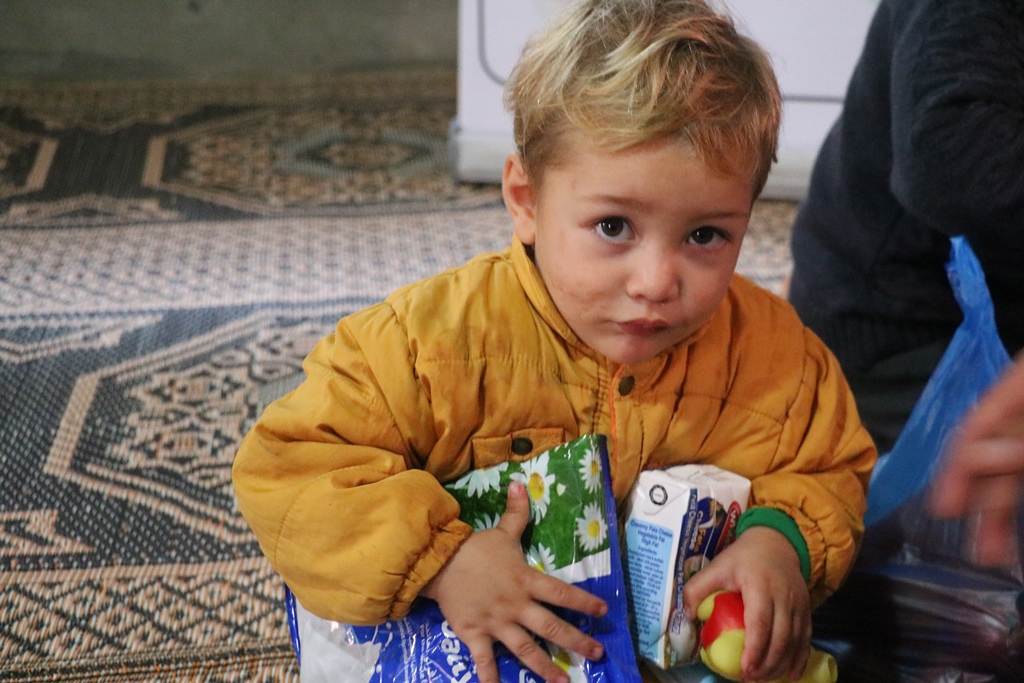
Our partners in Gaza were directed to Sabra as a family in desperate need. “Several days ago, we were contacted. They saw my poor living situation, and today provided me with a food parcel with fresh vegetables and more. We received the most basic and necessary food items for the house, even eggs! Eggs has not entered my house for more than a year!”
Like 600 other families in Gaza, Sabra is recipient of the KinderUSA Emergency Food Distribution that is ongoing. The project provided Sabra and her family with the basic and necessary items to ensure food security during this unprecedented period. For $75 you can feed a family like Sabra’s for one month. That is just $2.50 a day.
KinderUSA is not alone caring for families during these desperate times of worsening hunger and poverty. This virus knows no borders and is leaving a devastating cost most particularly on human life and the lives of our children. It is our shared responsibility and now more than ever, we need to support each other. Please make a donation today to help us expand our reach. Thank you.
The next installment of our live conversation series, Talks on Palestine, is Saturday, October 17th at 10 AM PST/ 12 PM CST/ 1 PM EST featuring Noura Erakat and We Are Not Numbers! Join us as we hear stories directly from Gaza’s fence.
Stream LIVE on our Facebook page or YouTube channel. The video will also be available after the fact across on Instagram and here on our website. While the event is free, registration is required.
In case you missed our discussion with Rami Khouri, you can watch it on our YouTube channel. We talked about the past, present and future of Lebanon, and how to move forward after the explosion in Beirut.
The goal of this installment of Talks on Palestine is to raise funds for our Mobile Library, which is back on the road distributing locally sourced food, PPE, and storytelling for families in south Lebanon. We have also partnered with the Lebanese Food Bank to increase food distribution efforts throughout Lebanon. This team is preparing meals and distributing boxes of baby necessities. A donation of just $4 will provide a meal for a family of 4 and $12 will provide a box of baby supplies for a week which includes diapers, wipes, and powdered milk.
KinderUSA, with our local partner on the ground, is implementing emergency food assistance in response to the severe socio-economic impacts of the COVID-19 pandemic in the country. In addition to the blockade of land, sea, and air, now in its 13th year, Gaza’s population is suffering mercilessly.
The gravity of the pandemic cannot be underestimated with Coronavirus infections surging in Gaza rising from 76 confirmed cases in August with 1 death, to 2445 confirmed cases and 17 deaths this week. Movement restrictions and curfews have led to a deepening humanitarian crisis leaving many families who were already struggling to put food on their table, now without hope.
“The situation is getting worse every day. People are hungry, they have no food and cannot meet their basic needs,” said Hana, KinderUSA Country Coordinator. “There is no work and each family is doing their best to help their neighbor. It’s very desperate and sad.”
Children are living in an unprecedented humanitarian crisis on many levels including food insecurity. All schools are closed and there is limited opportunity for home study with electricity no more than 3-4 hours a day. Women, who represent 11 percent of households, make up a third of the families in extreme poverty with no means to feed their children. Salwa who lives in the north was grateful to learn she would be a beneficiary. “My parents cannot help me, they look to me for help. What are we to do? I need nothing. Only my children need food.”
KinderUSA is preparing the distribution of fresh foods including dried legumes, canned meat, eggs, and milk for children in a 20 item ‘basket’ to 600 families of 7 or more in a household. With police escorts ensuring strict contact guidelines, families in quarantine are identified and included as beneficiaries along with female headed households and the elderly.
We are appealing to all our donors to please contribute so we can reach more families. For $75 you can feed a family for one month. That is just $2.50 a day. Mahdi who is in quarantine with his family called our representative in Gaza to thank her and to make sure “the people in America know how much we thank you.”
“COVID 19 has no borders and has shown us what it means to be human, to live and die. It is critical that those of us who believe in humanity continue to work together in the spirit of solidarity. Please, join us in making a meaningful donation today,” Dr. Laila Al-Marayati, KinderUSA Chairperson.
Rami Khouri is an internationally-syndicated columnist, Senior Fellow at Harvard Kennedy School Belfer Center, and Director of Global Engagement at AUB.
The blast that decimated large swaths of Beirut left hundreds of thousands homeless, and over 200 dead with thousands more witnessing their livelihoods in ruins. The explosion exacerbated already ravaging economic conditions for a population struggling to put food on the table.
The Beirut port explosion has created a major food security emergency in Lebanon leaving extreme hardship across the population. This after months of mounting COVID19 cases, increased poverty, and rising prices leaving many with little or no purchasing power.
The bleak reality on the ground is that many Lebanese families were already skipping meals, with over 60% of the population living under the poverty line according to a World Food Program survey, some going a full day without food.
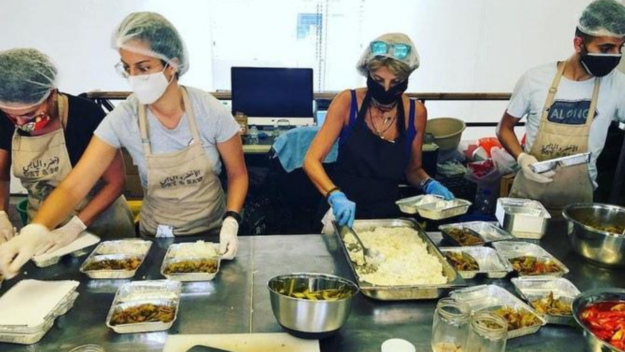
KinderUSA in partnership with MAP UK are still distributing much needed medical supplies and will provide full reporting once distribution has been completed. Understanding the emergency need for food security, KinderUSA continues to operate the Mobile Library in the south distributing food, PPE, and education to the camps and settlements. Now partnering with the Lebanese Food Bank (LFB), we are working towards enhancing their efforts to distribute fresh cooked meals to families throughout the Beirut area.
The team with the Lebanese Food Bank are preparing meals and distributing boxes of baby necessities. Just $4 will provide a meal for a family of 4 and $12 a box of baby supplies for a week which includes diapers, wipes, and powdered milk.
They are doing what they know best, along with all the local organizations and volunteers. KinderUSA is asking you to join us in expanding their coverage of families in need. Lebanon hosts the largest number of refugees in the world per capita. The Lebanese have never failed to show their humanity. Join KinderUSA today in supporting the Lebanese in their hour of need.
Please donate online today, $60, $40, $20, or whatever is meaningful to you. Thank you!
In case you missed our cooking demonstration with Laila El-Haddad, you can watch it on our YouTube channel. Laila cooked Okra and Lentils while discussing the intersection of food and politics in Gaza.
The goal of this installment of Talks on Palestine is to raise funds for our Women Empowerment Chicken Farming program which continues to bring career opportunities to poor women-headed households in the Gaza Strip. A donation of $20 will provide several chicks, medicine to support the chicks, and feeders to one family. However, any amount will help provide families with the necessary supplies needed to successfully run their own chicken farming business!
Women in the chicken farming program receive 200 baby chicks to be farmed for sale on the open market. They are also provided the training and tools necessary to successfully raise the chickens and hatch eggs. During this process, the women learn indispensable information about running their own businesses and providing for their families.
During the next stage of the program, KinderUSA actually purchases some of the chickens and eggs back in order to provide the women with further income to care for their families. To ensure food security in the future, the women keep all the tools and equipment they were given so they can continue to grow their chicken farming businesses and become self-sufficient. Help us reach as many families as possible!