The collective punishment and “crimes against humanity” identified by the recent Human Rights Watch report always fall on children who pay the highest price with their lives and their future. As of this writing, over 60 children have been killed in Gaza from the onslaught by one of the most advanced militaries in the world. Day after…
Once again children and civilians are bearing the brunt of assault on their homes and religious institutions during the holy month of Ramadan. Facing expulsion from their homes to cowering in the arms of equally traumatized parents as bombs rain through the night at a time when families were to share iftar, the breaking of…
Your support remains critical during Ramadan and beyond. Without you, our work would not be possible! When Ashwaq’s husband passed away three years ago, the 37-year-old widow struggled with the arduous challenge of caring for her seven children. Unable to find employment due to her lack of skills, yet busy with the demand of caring…
Hanin’s StoryHanin is a 30-year-old mother caring for seven children on her own, with the eldest aged seven. Her husband’s recent illness has left him incapable of participating in day-to-day activities. Hanin currently lives in a shelter provided to her out of the goodwill of others. Unfortunately, open sewage runs through the middle of the…
YOU DID IT! The ‘Water Rehabilitation’ campaign for Gaza was met thanks to the generosity of a handful of KinderUSA supporters! After a year of difficulties with accessibility and inclusion associated with remote learning, children in Gaza are finally returning to face-to-face learning with the prospect of clean drinking water and rehabilitated lavatories! Strict health…
The continued, suffocating, blockade, now approaching its 15th year, has affected every aspect of life in Gaza, severely limiting access to all essential services, while leaving more than a half-million children without access to safe drinking water. Noura Erakat, human rights attorney and an Assistant Professor at Rutgers University, was recently quoted in the Euro-Mediterranean Human…
After the death of her husband from a high voltage shock while attempting to repair the home refrigerator, 24-year-old Sa’adia suddenly found herself widowed with five children, the youngest 3 months old. Before her husband passed away, he struggled to bring home income working in the agriculture fields until that ended along with most jobs…
Like many families in the Gaza Strip, Ana’am was greatly impacted by the COVID-19 lockdown. Losing both her job and home, Ana’am struggles to provide food and basic necessities for her 5 children. Rather than living on the street, space was found for her and her children in an abandoned store front, though it does…
The situation in the Gaza Strip has never been worse than it is nowadays. The global COVID-19 pandemic has only highlighted the already terrible conditions the Strip was going through. People in Gaza are currently living in a double quarantine. The first quarantine is due to the COVID-19 pandemic and the other one is due…
“I have many illnesses, but my main source of pain is not being able to feed my children.” said Sabra, who must feed and shelter 11 family members. The Guardian recently reported that in Gaza families search through rubbish to find food to feed their families. During this unparalleled period, the ripple effects from COVID19…
The collective punishment and “crimes against humanity” identified by the recent Human Rights Watch report always fall on children who pay the highest price with their lives and their future. As of this writing, over 60 children have been killed in Gaza from the onslaught by one of the most advanced militaries in the world.
Day after day we watch, once again, as the bombs fall on the homes of thousands of families and with each attack questioning who will be next?
“We all have our important papers ready to leave if we are hit and fortunate to live through it,” said Hana, KinderUSA Country Coordinator in Gaza.
After toppling the building housing international media, the bombardment that followed was the most severe barrage of missiles with Hana stating quite simply, “I can’t believe we are still alive.”
Each night opens a new chapter of fear, death, destruction, and despair with wanton cruelty.
The families KinderUSA serves are still rebuilding from the 2014 51 day assault. Gazans will dig out of the rubble and rebuild again, only to wait for the next bombardment. Homes, buildings, medical facilities, businesses, infrastructure all under attack and being obliterated. No one is safe.
Palestinians across their occupied land face daily systematic racism and oppression from militant settlers in Sheikh Jarrah to a 14 year suffocating blockade of land, air and sea in Gaza. They are denied their basic human rights to freedom of movement, freedom to worship, and freedom to live peacefully in their homes.
There are no shelters for Palestinians to run to when bombs rain down deliberately targeting unprotected homes in Gaza, one of the most densely populated cities on earth. When bombs fall and missiles strike, they hit civilians who have no warnings.
Over 200 Gazan’s, one quarter of whom are children, have tragically lost their lives. Entire families are being annihilated. The numbers will continue to climb taking children, mothers, fathers, siblings, wives, and husbands. Those who survive the bombardment suffer a lifetime of trauma, and many more, lifelong disability.
KinderUSA is prepared and ready to distribute food to families in need throughout Gaza. Our team is waiting for the military bombardment to subside before venturing out in full force to care for families who have lost everything including their loved ones and homes. Exhausted but always steadfast, Palestinians will survive this latest assault on humanity.
Once again children and civilians are bearing the brunt of assault on their homes and religious institutions during the holy month of Ramadan. Facing expulsion from their homes to cowering in the arms of equally traumatized parents as bombs rain through the night at a time when families were to share iftar, the breaking of fast, and suhoor the early morning meal before a day of fasting.
Uprooting Palestinians from their homes through forced removal and displacement is in violation of international law. Flouting the laws behind a wall of silence from the international community encourages illegal settlers and radical nationalists who have been trying for decades to displace these and other Palestinian refugees from their homes affecting over 970 people, 424 of whom are children in Sheik Jarrah alone.
According to a 2020 UN survey at least 218 Palestinian households in East Jerusalem have eviction cases filed against them, most by radical settler groups.
In Gaza, many families still live in the rubble left from 2014 and struggle through Covid and a strangulating blockade of land, air, and sea now in its 14th year affecting every aspect of life and livelihood. Yet, the bombs fall, and children are killed.
Our country coordinator in Gaza said that, “I sit with my children afraid with bombing all around. It is scary for me. What are my children feeling and I am so helpless to protect them?”
Children should not be subject to nightly air raids, sirens or awakened to the sounds of jets and bombing – yet for children in Gaza, this is an all too familiar part of their childhood.
No Palestinian is safe in their homes or place of worship where freedom of faith is a noble idea for most believers. Witnessing soldiers attacking prostrate worshipers has chilled the entire Muslim world.
At a time when families should be planning get-togethers and celebrations, they are instead facing the fear of more devastation and loss. The violence must end. Lasting peace and security for both sides means ending the occupation and the collective punishment of the people in Palestine.
“The current assault reminds us that Palestinians live on the brink of devastation every day. They cannot take life for granted like so many of us. We need to uplift and support them now and always,” Dr. Laila Al-Marayati, Chairperson KinderUSA.
Your support remains critical during Ramadan and beyond. Without you, our work would not be possible!
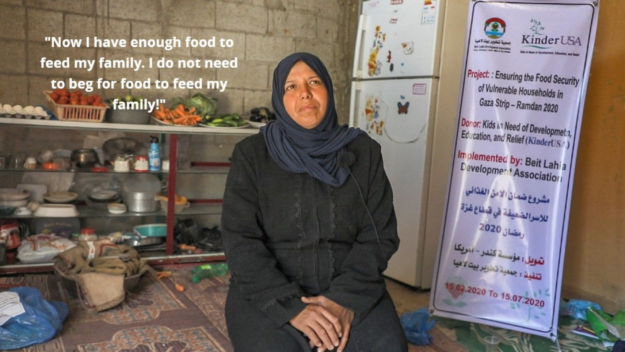
When Ashwaq’s husband passed away three years ago, the 37-year-old widow struggled with the arduous challenge of caring for her seven children. Unable to find employment due to her lack of skills, yet busy with the demand of caring for all her children, there were days when Ashwaq had no food for her young family to eat. She relied on the efforts of her 14-year-old son to work the fields and provide for the family. After an injury to her son’s hand, Ashwaq struggled, once again, to provide food for the family. “Many days we just ate bread given to us,” Ashwaq explained.
The Gifts of Dignity, Empowerment, and Independence
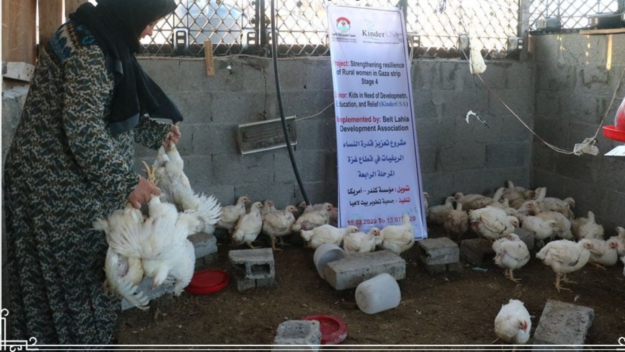
At the beginning of 2020, Ashwaq became a beneficiary of the KinderUSA Women Empowerment Chicken Farming Project, which changed the lives of her and her family. The program provided her with the training, tools, medications, and live poultry. Ashwaq was a supplier to the Kinder USA Ramadan Food Parcel Program last year and this year, as well. The COVID-19 pandemic has reduced economic opportunities, but the women who raised and sold chickens to KinderUSA over the last 16 months were able to provide much-needed protein to their community while earning an income for their families. This program has multiple benefits in offering sustenance to families in need, stimulating the local economy, and empowering women heads of households.
Your Chance to Make a Difference
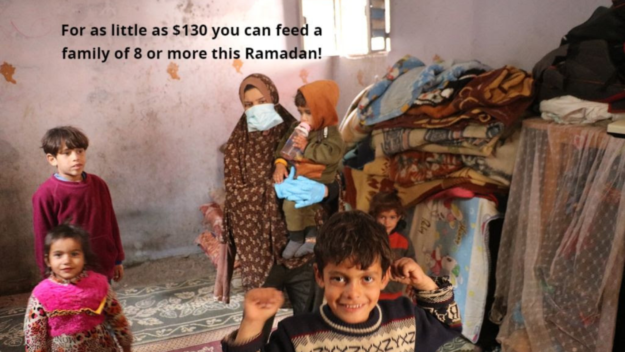
The KinderUSA Ramadan Program is distributing fresh food to impoverished families, daily, throughout the month of Ramadan. Our goal is to reach 2000 families of eight or more. However, in the past, we have successfully exceeded this goal and assisted more families year after year! This effort is only made possible with help of our generous donors. If you have not already, we urge you to make an online donation today for $130 to feed an entire family for one month. However, a thoughtful contribution in any amount will benefit the people we serve. Thank you for your humanity and compassion this Ramadan and always.
I am very happy with this project. I have an income source to care for my children. Thank you to all who support this project. Ramadan Kareem!” – Ashwaq
Hanin’s Story Hanin is a 30-year-old mother caring for seven children on her own, with the eldest aged seven. Her husband’s recent illness has left him incapable of participating in day-to-day activities. Hanin currently lives in a shelter provided to her out of the goodwill of others. Unfortunately, open sewage runs through the middle of the room, causing floods in the winter and creating a health hazard and unsafe living space for her household. The only source of income for her family is the $40 a month stipend provided by the United Nations Relief and Works Agency, which she uses to buy food and other basic necessities.
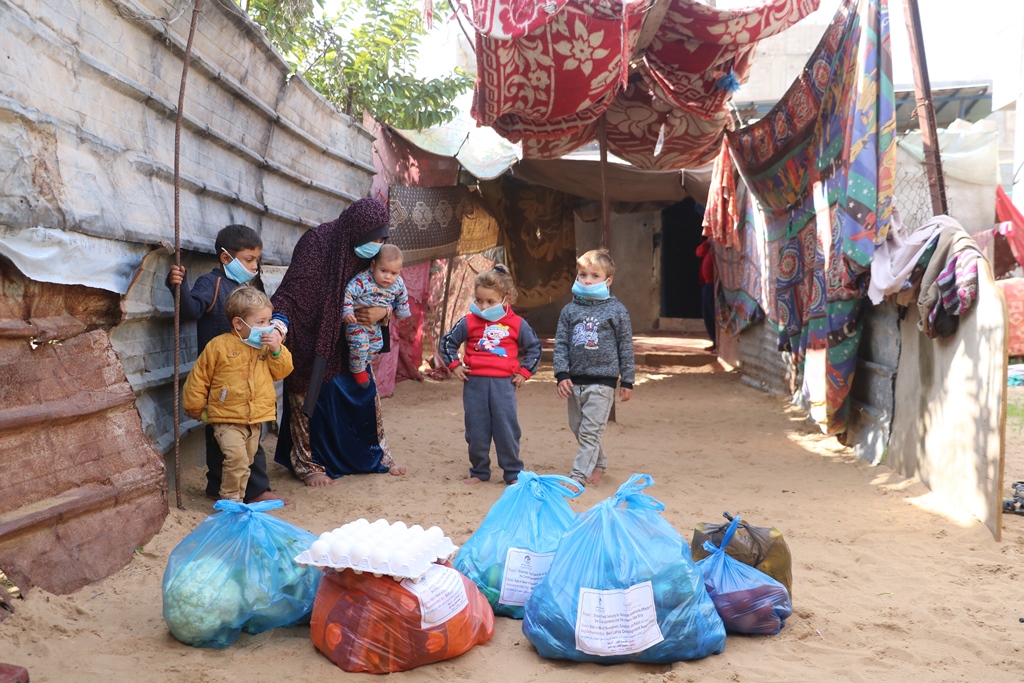
A Vital Lifeline to Families in Need Hanin is one of the KinderUSA Ramadan beneficiary families. She, along with 2,000 other families, will receive fresh food parcels twice during the month of Ramadan. Each parcel will contain fresh vegetables, fruits, live chickens, freshly prepared cheese, and other seasonal goods. Moreover, she will receive fresh eggs from the KinderUSA Women’s Cooperative. These items will ensure that she has a month’s worth of nutritious meals for her family to break their fasts during this month.
In addition to benefitting families in need, the KinderUSA Women’s Cooperative supports 30 women working in food-producing cooperatives, paying them higher than the market price in order to sustain their families and livelihoods. Also, 60 small-scale farmers are benefitting and have been working since January to fulfill the basket needs. Each of these women and farmers is financially supporting their extended family, and the means and resources they receive from KinderUSA help to stimulate the local economy.
Due to the COVID-19 pandemic, our implementing partners have expanded on the number of distribution sites and have followed the guidelines of the Ministry of Health, as well as the World Health Organization.
You Can Make an Impact! During this holiest of months, we ask that our generous donors support this project for as little as $130 to feed a family of eight or more during the month of Ramadan. As we strive for the Palestinians to be relieved from their suffering, we can do our part now to make a difference in their lives with our prayers and support.
Thank you and Ramadan Mubarak from the KinderUSA family to yours!
“…With every difficulty there is relief” (Quran 94:5).
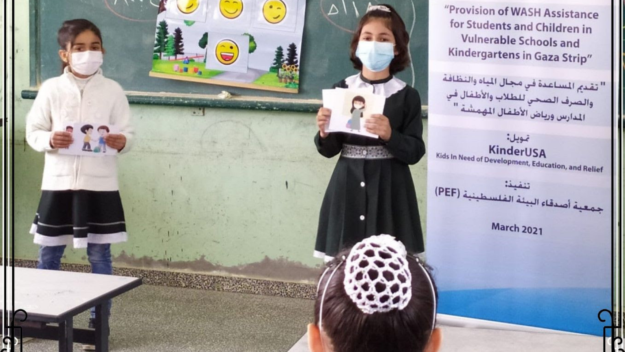
YOU DID IT! The ‘Water Rehabilitation’ campaign for Gaza was met thanks to the generosity of a handful of KinderUSA supporters!
After a year of difficulties with accessibility and inclusion associated with remote learning, children in Gaza are finally returning to face-to-face learning with the prospect of clean drinking water and rehabilitated lavatories!
Strict health and safety measures have now been adapted to make face-to-face education possible for more than half a million students in Gaza and surrounding governate areas. KinderUSA with our implementing partner, the Palestinian Environmental Association, requested funding for the Water Rehabilitation project which provides water tanks, clean drinking water, rehabilitated gender-specific lavatories, handicap accessible lavatories, and basic hygiene and safety education for 35 primary schools and 15 kindergartens and you answered the call!
This ongoing project also includes Personal Protection Equipment along with education sessions that focus on raising awareness controlling the spread of COVID-19 in addition to best practices for personal hygiene, safe water, and public health preparedness.
Our donors compassion truly inspire us daily! It takes all of us working together to combat the profound inequalities facing so many children across the globe. Thank you for having our backs and having a positive impact on the lives of so many vulnerable children.
The continued, suffocating, blockade, now approaching its 15th year, has affected every aspect of life in Gaza, severely limiting access to all essential services, while leaving more than a half-million children without access to safe drinking water.
Noura Erakat, human rights attorney and an Assistant Professor at Rutgers University, was recently quoted in the Euro-Mediterranean Human Rights Monitor, “We are now entering 2021, the fifteenth year of Israel’s naval blockade and land siege, and the global community seems unfazed by the unlivable conditions in the tiny coastal enclave…These conditions are unconscionable and have no moral, legal, or policy justification. The siege must end without preconditions and condemned to the history of atrocities never to be repeated again.”
With unemployment amongst the highest in the world, poverty rates hover above 56%. COVID has exasperated life for children further with schools closed and nearly 600,000 children lacking access to a reliable power supply and the internet, and no computer access. Many parents find the only alternative is to coordinate phone sessions with their teachers to receive their daily lessons.
After successive wars targeting the population in Gaza, post-traumatic stress disorder is common among children and now with lockdown, parents are finding their children afraid to socialize outside of their immediate family. Many in Gaza refer to it as a “double post-traumatic stress disorder.”
KinderUSA ended last year providing fresh food to families in desperate need amidst reports of children digging through garbage for food. Moving into the new year, we have already begun preparing for Ramadan incorporating female-owned farms who must care for their children and often, extended family, alone; a small scale rabbit farming project that will enlist men and women, providing them with income to care for their families; and a food processing project for female-headed households providing them with all the tools, skills, and education needed to start their own business.
This is a sampling of the work ahead we are able to do with your continued support. In the midst of the pandemic, our donors proved to be humanitarians bolding stating, the children in Palestine will not be forgotten. Working together, you empower families who want to support themselves with the goal of promoting the overall well-being of their children.
KinderUSA will continue to push for solutions that prioritize sustainability. Thank you for continuing to stand with the children in Palestine.
After the death of her husband from a high voltage shock while attempting to repair the home refrigerator, 24-year-old Sa’adia suddenly found herself widowed with five children, the youngest 3 months old. Before her husband passed away, he struggled to bring home income working in the agriculture fields until that ended along with most jobs in Gaza due to the pandemic.
Sa’adia now relies on charity, the goodwill of neighbors, family when they can, and organizations like KinderUSA just to feed her children. Living alone with her five children in a house that lacks the most basic needs has been a challenge and a blessing; they do have shelter unlike many female-headed households in Gaza.
“I am unable to feed my children and I wait for my relatives or my brother who has a big family to help me with the least they can, I do not know what to do to provide my children with their needs.” Said Sa’adia.
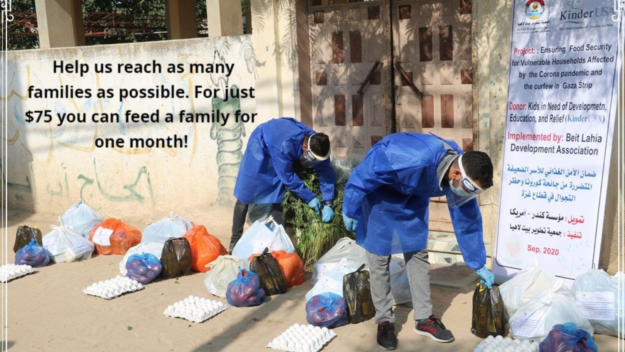
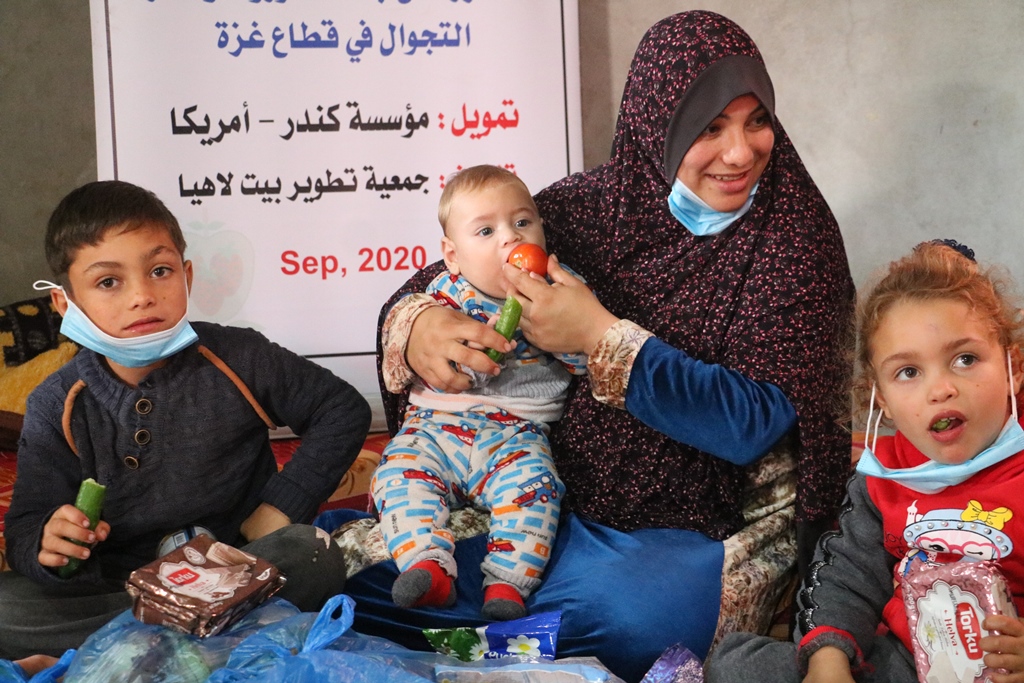
Along with 880 other families in desperate need, our partners on the ground in Gaza provided Sa’adia with enough food for a month as part of the KinderUSA Emergency Food Distribution. Each family received enough food to get them through a month which includes dried legumes, canned meats, eggs, milk, and PPE.
The parents of thousands of vulnerable children in Gaza do not know where their next meal will come from. This, at the same time COVID-19 is ravaging the country contributing to rising levels of hunger and poverty. Moving into the New Year, Gazan’s will face even more hardships as families move in a downward spiral of uncertainty.
For $75 you can feed a family such as Sa’ada’s for one month. That’s just $2.50 a day for 6 family members. Whatever amount is meaningful to you, please consider making a donation today. Thank you for your humanity and please, be safe.
Like many families in the Gaza Strip, Ana’am was greatly impacted by the COVID-19 lockdown. Losing both her job and home, Ana’am struggles to provide food and basic necessities for her 5 children. Rather than living on the street, space was found for her and her children in an abandoned store front, though it does not have proper kitchen or bathroom facilities. These unhealthy and unsafe conditions exacerbate the situation for two of her children who suffer from various health concerns.
During these difficult times, Ana’am’s family relies on food assistance from the UN and relatives, but it is still not enough to cover their basic needs. Today, many families like Ana’am are struggling to put food on their tables, experiencing the most extreme conditions due to COVID related economic closures and lock downs.
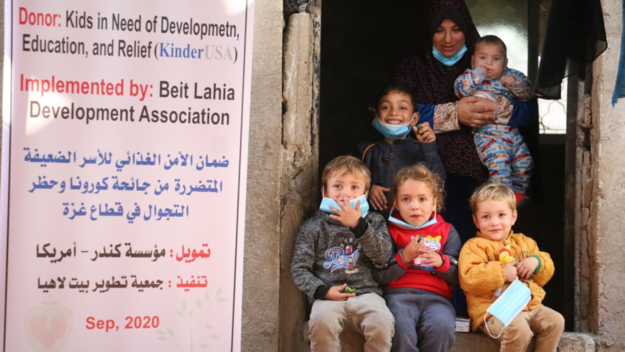
Our partners in Gaza were directed to Ana’am as a family in desperate need and were provided with enough food for a month, along with 650 families who are beneficiaries of the ongoing KinderUSA Emergency Food Distribution. Each family receives enough food to get them through a month which includes dried legumes, canned meats, eggs, milk, and PPE.
Thank you to all of those who continue to support our efforts during this critical time in all of our lives, but particularly the lives of Palestinians living in Gaza. This virus knows no borders and now, Gaza is experiencing a 30% infection rate and facing another countrywide lockdown. We are appealing to all our donors to continue to support this project so we can reach more families. For $75 you can feed a family for one month. That is just $2.50 a day.Please make a donation today to help us expand our reach. Thank you.
The situation in the Gaza Strip has never been worse than it is nowadays. The global COVID-19 pandemic has only highlighted the already terrible conditions the Strip was going through. People in Gaza are currently living in a double quarantine. The first quarantine is due to the COVID-19 pandemic and the other one is due to the blockade which has been the Strip’s harsh reality for the past 14 years.
Gazans find themselves trapped in increasingly unlivable conditions. This quarantine has led to more food insecurity, unemployment, and poverty rates. There are more than 1800 families, which is increasing daily, that are quarantined with no access to basic needs such as food and medications. These families consist of children, people with disabilities, and elders. The government is not able to supply these families with their daily needs. KinderUSA has been working on supporting more than 600 of these families over the last few months but it is still just a drop in the bucket of need.
The situation did not only worsen economically but also psychologically, especially for children. For the many children living in camps, school is considered an outlet for their energy and is also a release from the pressure they feel due to the blockade and ongoing conflict. Schools are now closed as a preventative measure to avoid spreading the virus. This closure has resulted in a great number of children receiving no education for the past months. Home learning systems are not an option because of the lack of proper internet and electricity. It is expected that children will be in need of more psychological support after the pandemic since they are not communicating with their peers and locked in their houses.
Today we have 30 neighborhoods out of 90 in the Gaza Strip, considered as red zone areas where movement is restricted due to the spread of the virus there. These 30 areas are known to have at least half of the population in the Gaza Strip. The closure of these areas forced many people out of their jobs, leaving them unable to afford their basic needs and scrambling just to feed their families. People in Gaza have reported that they would prefer to die due to COVID-19 instead of hunger. After allowing companies, high schools, and markets outside of the red zones to reopen for only 11 hours within the past month, all premises are expected to close fully again due to the increasing number of COVID-19 cases and deaths.
The increasing number of COVID-19 cases is also overwhelming hospitals as they are unable to provide medical assistance to such huge numbers of people. Today, more than 20% of the daily tests are positive, which means that the number of cases is increasing rapidly. Yet, hospitals lack testing kits meaning people are not able to get tested, further increasing the danger of spreading the virus. Hospitals also have a shortage of almost 47% of medications to assist COVID-19 patients. The people needing intensive care include the young, elderly, and those with chronic diseases. A huge problem is there are only two hospitals dealing with COVID-19 cases with a total of 50 beds in the intensive care unit.
The Gaza Strip has been never in so much need of humanitarian aid and your help. The levels of poverty, food insecurity, psychological problems, unemployment, and more are becoming the Strip’s reality. We want to thank our on-the-ground coordinator, Hana, for her tireless work in getting important resources and hope to our people. We appreciate you.
KinderUSA continues to provide emergency food relief baskets to families that include dried legumes, canned meats, eggs, and milk. This virus knows no borders and is leaving a devastating cost most particularly on human life and the lives of our children. It is our shared responsibility and now more than ever, we need to support each other. We are appealing to all our donors to please contribute so we can reach more families. For $75 you can feed a family for one month. That is just $2.50 a day. Please make a donation today to help us expand our reach. Thank you.
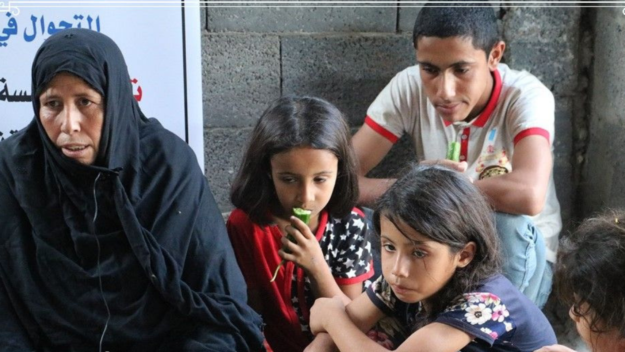
“I have many illnesses, but my main source of pain is not being able to feed my children.” said Sabra, who must feed and shelter 11 family members.
The Guardian recently reported that in Gaza families search through rubbish to find food to feed their families. During this unparalleled period, the ripple effects from COVID19 has witnessed mass unemployment, poverty, and hunger.
Sabra and her children live in harsh conditions in north Gaza in a structure, lacking electricity, and with water not properly connected leaving all vulnerable for numerous waterborne diseases.
“I cannot do it all. Food is first, to feed my children,” said Sabra.
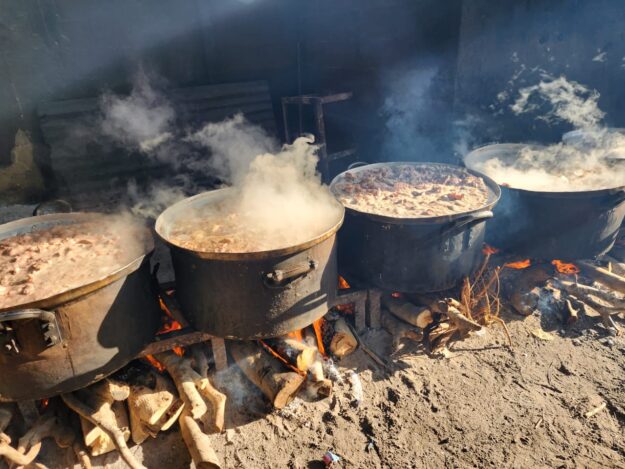
“My disease is not my suffering. Its watching my children go without. We have no source of income except for charity given every three months, which is not enough for us to eat. After the pandemic and closure, most of the time we do not find anything to eat. When I do find food, I use fire to cook our food from wood and scrap on the street. Even that is becoming scarce.”
Our partners in Gaza were directed to Sabra as a family in desperate need. “Several days ago, we were contacted. They saw my poor living situation, and today provided me with a food parcel with fresh vegetables and more. We received the most basic and necessary food items for the house, even eggs! Eggs has not entered my house for more than a year!”
Like 600 other families in Gaza, Sabra is recipient of the KinderUSA Emergency Food Distribution that is ongoing. The project provided Sabra and her family with the basic and necessary items to ensure food security during this unprecedented period. For $75 you can feed a family like Sabra’s for one month. That is just $2.50 a day.
KinderUSA is not alone caring for families during these desperate times of worsening hunger and poverty. This virus knows no borders and is leaving a devastating cost most particularly on human life and the lives of our children. It is our shared responsibility and now more than ever, we need to support each other. Please make a donation today to help us expand our reach. Thank you.