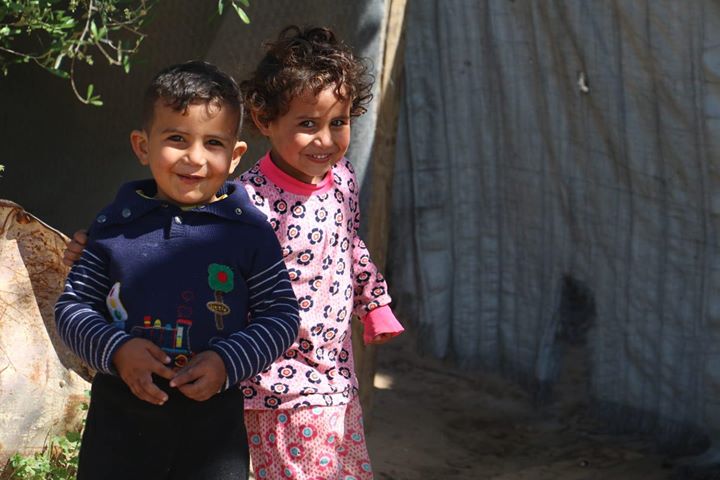
In its 28th month, the blockade of Gaza continues to deny children their most basic needs. Confining 1.5 million people, more than half of whom are children, to a 28 mile long and 7 mile wide coastal strip has forced many Gazans to increasingly turn to painkillers as a means of escape. With an economy in ruins, and the ravages of the three week Israeli offensive ever present with no means of reconstruction, the basic rights of children continue to be denied as they face this prolonged, unnecessary humanitarian crisis.
The lingering devastation from last winter's war finds children sitting in classrooms without windows, poorly lit, and meagerly furnished. With winter just around the corner, dark, cold classrooms will be the norm once again, due to the blockade. Banning all but “essential” humanitarian goods in the name of security, word has come that coffee and tea have now been removed from the threat list. Stationary and textbooks for school children continue to somehow pose a danger as do pens, pencils and concrete for construction.
Reconstruction from the 27 December – 18 January war of homes, schools, and health facilities is impossible without building materials, most of which is sitting at borders ready for the rebuilding effort while more than 280 schools damaged from the war cannot be repaired forcing children to sit and endure the rain, snow, and cold temperatures without windows.
Remnants of the war have put children further in danger of death or injury from unexploded ordnance. Children live in constant fear and trauma uncertain as to when the next bombardment will come. Teachers are reporting that any loud sounds cause children to “scream” and “duck” for fear of what’s coming.
This is deplorable. Horrific violations of human rights and humanitarian law have become routine in Gaza with children and women suffering disproportionately. There is not a child in Gaza today who knows what life is without war. The challenges this generation faces dwarf any earlier estimates of spiraling poverty and suffering. What is happening to the children in Gaza is not only disastrous for them, their families, and their nation, but it represents an incalculable blow to all of humanity.
How can anyone discuss the building of peace and security without ensuring the survival of this generation? These innocent beings have lived through what no child should ever have to live through and it is incumbent upon all of us, decision makers and leaders included, to protect these children and work towards relieving their suffering while ensuring some semblance of a childhood.
There is an enormous amount of work to be done and all of us at Kinder USA believe we have an uphill battle that can be won together. Thank you for your continued support.
An Update on our Children
Saturday, 10 October 2009
As many of you are aware, Palestinians remain the largest refugee population worldwide lingering in an untenable condition. For many parents, rising food prices in the West Bank and Gaza contribute to ongoing food insecurity for their children. In Ramadan, many families were unable to prepare a nutritious meal after a day of fasting. "Food insecurity" is a condition whereby people lack sustainable access to nutritious food to maintain a healthy life. Palestinian families face unbearable obstacles with estimates of 43% of the population living below the poverty line of $2.30 a day and 15% in absolute poverty.
Standing alone, the never ending siege continues, locking people in an open prison. Now in its third year, the blockade has ruined the living conditions of the entire population. John Ging, the director of the United Nations Relief and Works Agency in Gaza recently stated, “The humanitarian situation here in Gaza continues to deteriorate at an alarming rate for the ordinary poor citizens."
1.5 million Gazan’s, over half who are children, endure the rapid deterioration of livelihoods while forgoing any aspirations of a future. The senseof hopelessness was recently captured in a survey conducted by Save the Children Sweden whereby adult and child alike expressed “feelings of constant insecurity and powerlessness.”
During the month of Ramadan, Kinder USA was able to provide food to over 1600 families in both the West Bank and Gaza, with 8 or more members in each family. In many of the families, 10 to 13 children were the norm, while in the West Bank village of Yatta, many of the beneficiary children and young adults were not only in desperate need, but physically challenged.
In Gaza 30 local farmers who have watched their livelihoods disintegrate over the years due to the blockade, benefitted from the project along with women-led cooperatives who prepared maftool (a traditional dish made of burghal), pressed dates, thyme, and honey for distribution. Families shopped with vouchers, each worth $110 purchasing fresh fruits, vegetables, poultry and dairy products to carry them through the month.
Cooperating with the Charitable Consumer Market in the village of Yatta, families were able to shop not only for fresh foods, but also consumables such as oil, seasonings and all that is needed to complete the family meal.
Fayza, whose husband died of cancer some years ago, raises her 6 six school-age children without an income, subsisting on monthly dry food rations provided by various organizations. Shy and not willing to speak, her children thanked all who made it possible for them eat a nutritious meal throughout the month of Ramadan.
Our project is continuing through the end of the year as the need is great and ever growing. Restoration of human dignity in the lives of Palestinians has been the cornerstone of Kinder USA’s work and through grants to community-based organizations, as during our Ramadan project, we not only help to boost the local economy, but also lay the foundation for a future that serves the best interest of children. All of us at Kinder USA know that nothing substitutes an environment of peace, stability and prosperity but until that day, our work continues with your support. Thank you.
Ramadan in Gaza
Saturday, 22 August 2009
What does the beginning of Ramadan hold in store for the people of Gaza? The answer: daily power outages, frequent disruptions to water supply, and raw sewage flowing into the streets where children play. The ongoing blockade means that 1.5 million people remain imprisoned in one of the most densely populated areas on our planet. Of course, innocent women, children, and the elderly bear the lion's share of suffering. Let there be no doubt -- the human cost of this siege is nothing less than an affront to humanity.
Continuing restrictions on imports such as diesel cause chronic power shortages, which in turn impact the delivery of water, sewage and healthcare systems, all dependent on an uninterrupted supply of electricity. Basic food items such as flour, sugar, salt, and oil are allowed into Gaza, but at a rate which, according to the UN, only covers about half of the population's most immediate needs. Certain food items such as canned foods, coffee, and even baby formula remain on the ‘restricted’ list and are not allowed entry. Adobe ovens, remnants of another era, have made a comeback due to the impossibility of finding fuel for cooking.
More than 75% of Gazans are reported to be food insecure due to dearth of nutritious foods, increase in poverty, destruction of agricultural land, and the inevitable increase in prices. Diets now consist of foods high in carbohydrates such as cereal, sugar and oil, while protein-rich foods such as fruits, vegetables, and poultry remain scarce. This exasperates an already alarming situation for a malnourished population. Already, more than two-thirds of the children are reported to be suffering from Vitamin A deficiency and almost half of children under the age of 2 are anemic. The irreversible, long-term effects of such deficiencies include stunted growth, diminished capacity to learn, and difficulties warding off infections.
Among the people of Gaza, the day to day struggle for survival, coupled with diminishing prospects for the future, have deepened the profound sense of hopelessness and despair. Restoration of human dignity has been the cornerstone of Kinder USA’s work in Palestine. This mission takes on an even greater urgency during the month of Ramadan. By providing grants to community based organizations, KinderUSA not only serves hundreds of children through nutritional and sustainable projects, we help boost the local economy.
This Ramadan, we are once again working with local farmers and women-run cooperatives who make several types of processed food from local crops. Families in Gaza and the West Bank will be provided with chicken, eggs, fresh fruit, and fresh vegetables through our voucher program. The food enables families to prepare nutritious nightly meals to break fast during the entire month of Ramadan and beyond.
We are asking all of our generous donors to consider a contribution -- whatever you can afford -- to assist Kinder USA in providing enough food for a child and his/her family during the entire month of Ramadan. Keep in mind, these efforts also support impoverished local Palestinian farmers and women’s groups.
We at KinderUSA wish you a blessed Ramadan and thank you for your continued support. Through your efforts, we can continue this worthy mission of restoring dignity and hope in the lives of Palestinian children.